

When the Fed Raises Rates: What Higher Interest Rates Mean for Your Money
Higher interest rates can affect everything from savings and debt to spending and investing. Learn what a Fed rate hike could mean for your finances—and how reviewing variable-rate debt, cash reserves, spending habits, and your long-term investment strategy can help keep your financial plan on track.
Interest rates changed again—and this time, they moved higher.
When the Federal Reserve raises interest rates, the immediate headlines tend to focus on markets and economics. But the effects eventually make their way into everyday financial decisions: what you earn on cash, what you pay to borrow, how much a new home or car costs to finance, and even how businesses decide what to charge and where to invest.
In other words, a rate hike isn't just a Wall Street story. It can be a good reason to review your own financial strategy.
Why Does the Fed Raise Interest Rates?
One of the Federal Reserve's primary tools for fighting inflation is interest-rate policy. When the economy is running too hot and prices are rising faster than policymakers would like, higher rates are intended to reduce demand.
The basic idea is relatively straightforward: make borrowing more expensive and saving more attractive.
Higher financing costs can discourage households from taking on additional debt or making large financed purchases. Businesses face higher borrowing costs as well, which can affect expansion, hiring, investment, and pricing decisions.
Over time, slower demand can make it more difficult for companies to continuously raise prices—helping bring inflation closer to the Fed's longer-term objective.
For consumers, however, the more important question may be: What should you do differently?
1. Take Another Look at Variable-Rate Debt
When rates rise, variable-rate debt deserves attention.
Credit cards, certain home equity lines of credit, and other floating-rate loans can become more expensive as interest rates increase. Even households with strong incomes can find themselves paying significant interest simply because debt that once seemed manageable has become increasingly costly.
That doesn't necessarily mean every dollar of debt should immediately be eliminated. Liquidity needs, taxes, investment opportunities, and the terms of the debt all matter.
But it may be a particularly good time to inventory what you owe and ask:
Which debts have variable interest rates?
What interest rate am I currently paying?
Has that rate increased materially?
Do I have excess cash that could reasonably be used to reduce expensive debt?
Does my current payoff strategy still make sense?
For high-income households especially, cash flow can sometimes disguise inefficient debt. A payment may be affordable without necessarily being financially attractive.
2. Make Sure Your Cash Is Actually Working for You
There is another side to higher rates: savers may benefit.
Savings accounts, money-market funds, CDs, and other short-term instruments can offer more attractive yields when interest rates are elevated. That makes this an appropriate time to review where your emergency reserves and other short-term cash are sitting.
However, a better yield shouldn't automatically become a reason to accumulate excessive cash.
Your emergency fund still has a job: providing liquidity when something unexpected happens. Money intended for a home purchase next year has a different job. Money earmarked for retirement several decades from now has another job entirely.
The goal isn't simply to chase the highest available interest rate. It's to make sure each dollar is positioned appropriately for when you'll need it and what you need it to accomplish.
3. Be More Intentional About Spending
Perhaps the most relatable interpretation of restrictive monetary policy is also the simplest: policymakers are intentionally trying to make spending a little less appealing.
That doesn't mean eliminating restaurants, travel, entertainment, or everything else that makes life enjoyable. A financial plan that requires perpetual deprivation probably isn't a particularly sustainable one.
But periods of higher rates and persistent inflation can provide a useful opportunity to examine spending that has gradually become automatic.
Subscriptions accumulate. Lifestyle expenses creep higher. Convenience becomes routine. Raises and bonuses get absorbed into monthly spending without much thought.
A little intentionality can go a long way.
Maybe autumn really is a good time to trade a few happy hours for book clubs, dinners out for dinners at home, or another expensive weekend away for a cozy blanket, a candle, and an evening with nowhere to be.
The objective isn't austerity. It's making sure you're spending deliberately rather than simply spending because you can.
4. Don't Let Interest Rates Dictate Your Entire Investment Strategy
Higher rates can create opportunities in cash and fixed income, but they shouldn't necessarily cause long-term investors to abandon their broader investment plans.
For someone pursuing financial independence or an early retirement, this distinction can be especially important.
A competitive yield on cash may feel attractive today, particularly because it comes with considerably less volatility than equities. But today's interest rate is not guaranteed indefinitely—and long-term financial goals still require a strategy designed around decades rather than the next Federal Reserve meeting.
Instead of asking, "Where can I get the highest yield right now?" consider asking:
"What does this money need to accomplish, and when will I need it?"
That question helps separate emergency savings from near-term goals, intermediate-term investments, and assets intended to fund retirement decades into the future.
Higher Rates Can Be a Financial Planning Prompt
Federal Reserve decisions are important, but your financial plan shouldn't need to be reinvented every time policymakers meet.
Instead, changing rates can serve as a prompt to review the pieces of your financial life most directly affected by them: debt, cash reserves, upcoming purchases, investment allocation, and monthly spending.
If borrowing has become more expensive, it may be time to prioritize certain debts. If cash yields have improved, make sure your reserves are positioned appropriately. If inflation has pushed lifestyle expenses higher, revisit your cash-flow assumptions. And if attractive short-term yields are tempting you away from long-term investments, return to the purpose behind each account.
Sometimes the best response to economic uncertainty isn't making a dramatic financial move.
It's making a few thoughtful ones.
And if that happens to include spending a couple more autumn evenings at home with a good book, a blanket, and a candle, monetary policy could have worse side effects.
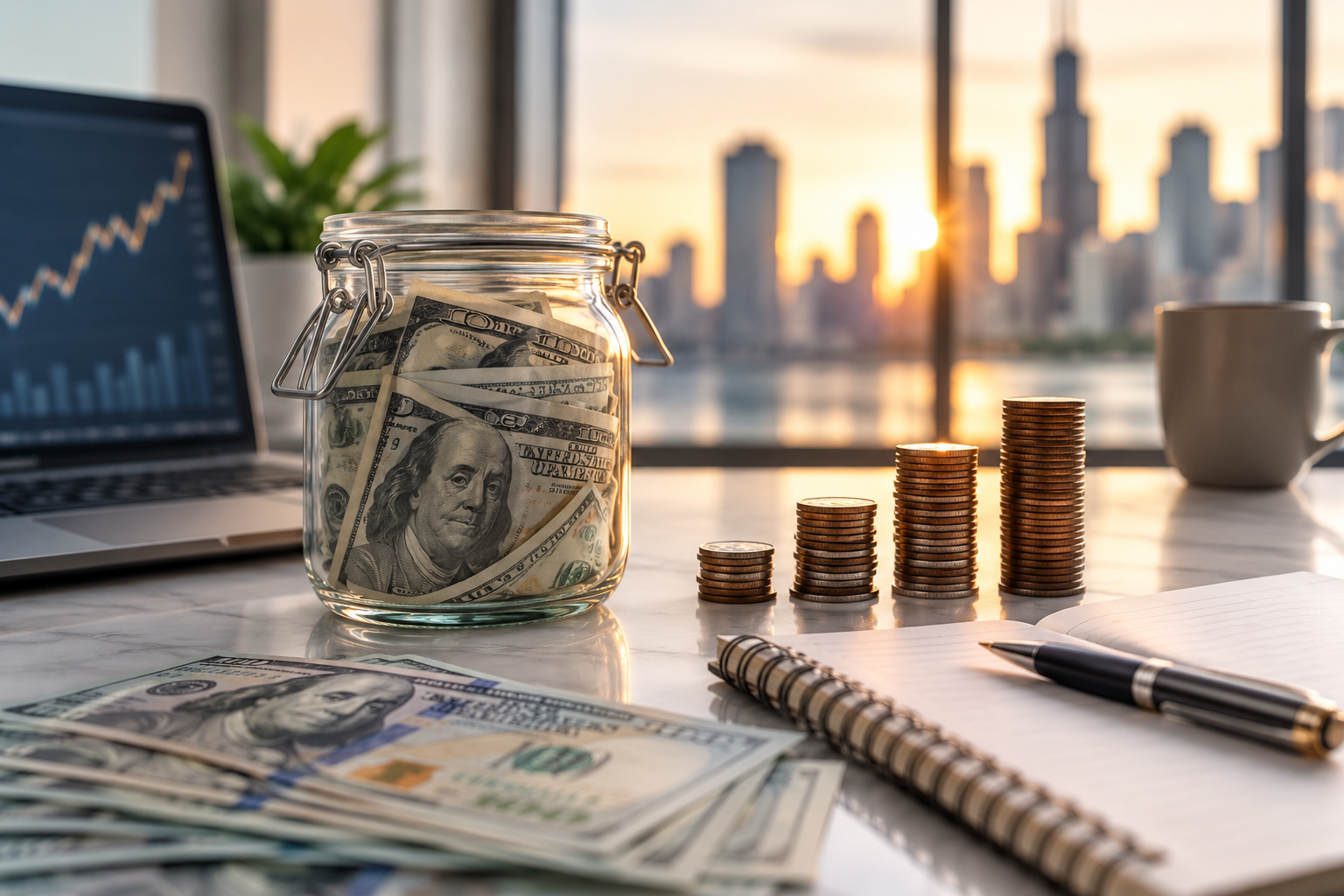
How Much Cash Is Too Much?
As interest rates change and inflation continues to affect purchasing power, it may be time to reconsider how much cash you’re holding. Explore how to balance liquidity for today’s needs with investment opportunities designed to support your longer-term financial goals.
Cash has become a surprisingly important part of financial planning conversations over the last several years. Following the Great Recession and suddenness of the pandemic, persistent inflation prompted the Federal Reserve to raise interest rates aggressively, and savers suddenly found themselves earning yields on cash that had been difficult to find for years. Money market funds, high-yield savings accounts, CDs and other cash equivalents became increasingly attractive places to keep money.
But market conditions change—and financial plans should evolve with them.
As interest rates move lower, the return available on cash may decline as well. At the same time, inflation can continue to erode purchasing power. For investors who accumulated significant cash balances while yields were higher, this creates an important question: How much cash should you actually keep, and when does holding too much cash become a risk of its own?
Cash Is an Important Part of a Financial Plan
Holding cash isn't inherently good or bad. What matters is the purpose that money serves.
An emergency fund is one of the most obvious reasons to maintain cash reserves. Unexpected home repairs, medical expenses, employment changes and other surprises can happen at any time. Money earmarked for expenses in the relatively near future may also belong somewhere accessible rather than being exposed to unnecessary market volatility.
For retirees, cash can serve another important role. Having funds available for upcoming spending needs may reduce the need to sell investments at an inconvenient time during a market downturn. For professionals in their peak earning years, cash can provide flexibility for upcoming purchases, career transitions, real estate decisions or other major financial goals.
Liquidity has value. The goal isn't to eliminate cash from a portfolio. It's to determine how much liquidity is appropriate for your particular circumstances.
The Hidden Cost of Holding Too Much Cash
The challenge begins when cash accumulates without a specific purpose.
For several years, higher interest rates made it easier to overlook this issue because savers could earn relatively attractive yields without accepting much investment risk. As rates decline, however, cash yields can decline with them.
Inflation adds another consideration.
Imagine your cash savings are earning 2.5% annually while inflation is running at 3.4%. Even though your account balance is earning interest, the purchasing power of that money is effectively declining by approximately 0.9% before considering other factors such as taxes.
Over one year, that difference may not feel particularly significant. Over longer periods and larger balances, however, the cumulative impact can become much more meaningful.
This is one reason investors should distinguish between money that needs to remain liquid and money that is simply sitting in cash.
Cash Can Feel Safe While Still Carrying Risk
When people think about investment risk, they often think first about stock market volatility. Cash generally doesn't experience those daily price swings, which can make it feel substantially safer.
But volatility isn't the only financial risk.
There is also purchasing-power risk: the possibility that inflation causes your money to buy less in the future. There is opportunity cost: money held in cash for long periods may miss opportunities for growth elsewhere. And there is longevity risk, particularly for retirees who may need their assets to support decades of future spending.
The appropriate balance depends on what the money is intended to accomplish.
Cash needed next year and money intended to fund a goal 15 years from now generally shouldn't be treated the same way. A financial plan can help assign different jobs to different portions of your assets rather than expecting one type of account or investment to accomplish everything.
What Can You Do With Excess Cash?
Investing excess cash doesn't necessarily mean moving it all into stocks.
Depending on an investor's objectives, risk tolerance, tax situation and timeline, there may be a range of possibilities to consider. Bonds and other fixed-income investments may play a role for some investors. A diversified investment portfolio may make sense for money with a longer time horizon. Taxable brokerage accounts can also provide access to investments without the age-related withdrawal rules commonly associated with retirement accounts.
That last point is particularly important. There is sometimes a misconception that investing means putting additional money into a 401(k) or IRA and accepting restrictions on when it can be accessed. Retirement accounts are valuable planning tools, but they aren't the only way to invest.
For professionals in their highest earning years, taxable investments can potentially complement retirement savings while creating greater flexibility for goals before retirement. For recently retired investors, coordinating cash, fixed income and longer-term investments can help create a strategy designed around both current spending and future needs.
How Much Cash Should You Keep?
There isn't one cash target that works for everyone.
Rules of thumb about keeping several months of expenses in an emergency fund can provide a starting point, but financial planning becomes more nuanced as wealth and financial responsibilities increase. Someone approaching retirement may have very different liquidity needs from a professional with stable income and decades until retirement.
Rather than focusing exclusively on a specific dollar amount, consider what your cash is intended to fund. How much is your emergency reserve? Are there major purchases or expenses expected over the next few years? How stable is your income? If you're retired, where will upcoming distributions come from? And once those needs are accounted for, how much cash remains without a defined purpose?
That final amount is often where a deeper conversation becomes worthwhile.
Give Every Dollar a Purpose
Cash serves an important role in nearly every financial plan. The objective isn't to chase the highest possible return on every dollar or invest money that needs to remain readily available.
Instead, the goal is intentionality.
As interest rates and inflation change, a cash strategy that made sense a few years ago may no longer be the best fit today. Periodically reviewing your savings, investment accounts and upcoming financial needs can help determine whether your money is positioned appropriately for both the life you're living now and the goals you're working toward.
If you've accumulated a larger cash balance, are approaching retirement, recently retired, or simply haven't reviewed how much you're holding in savings, this may be a good time to revisit the conversation. A comprehensive financial plan can help determine how much cash you truly need, where that cash should be held, and whether excess savings could be put to work more effectively elsewhere.
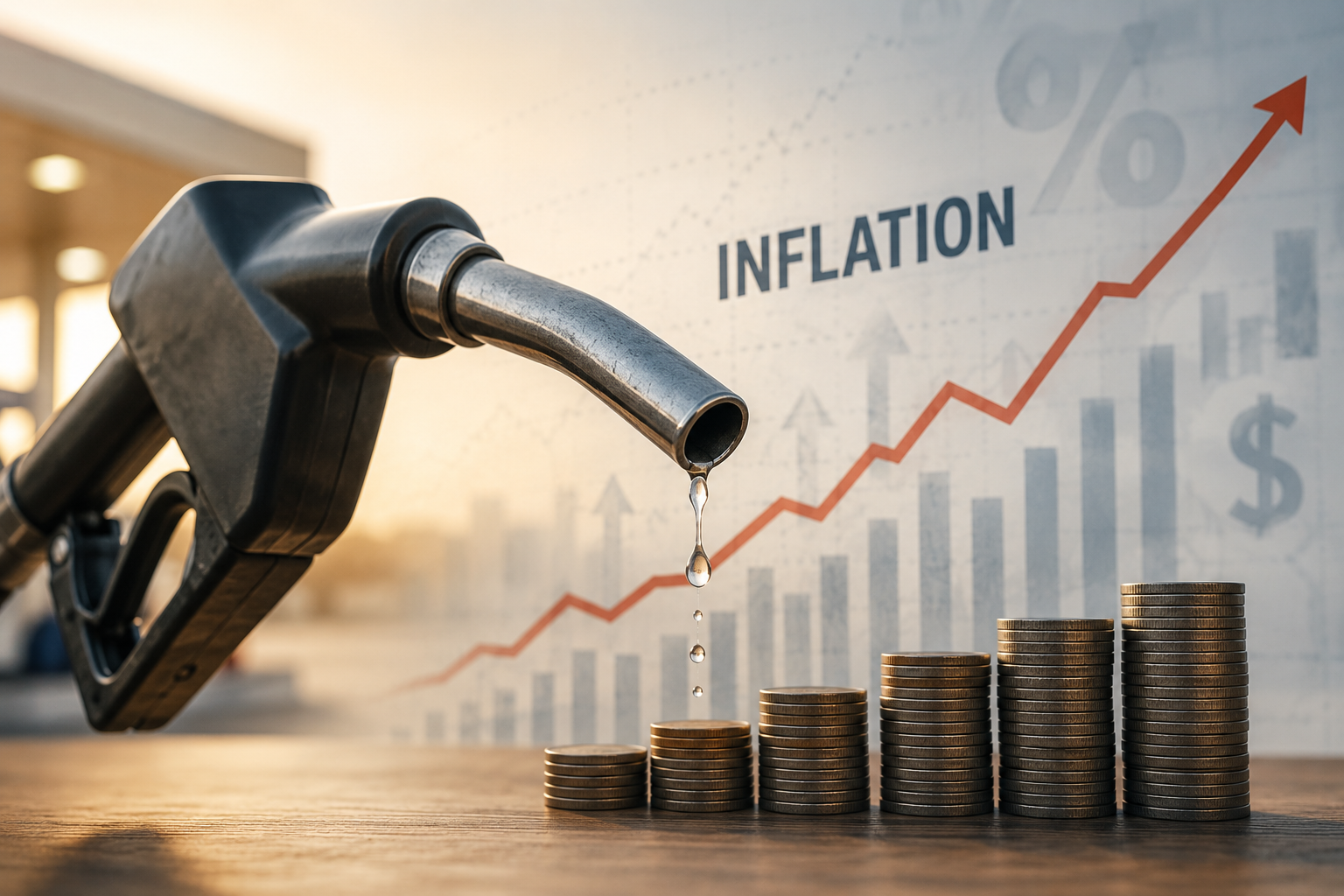
What Gas Prices Can Tell Us About Inflation
Every time we pull into a gas station, we instinctively glance at the price on the sign. Whether it's a welcome surprise or a frustrating increase, those numbers have a way of shaping how we feel about the economy before we ever open a news article or watch the financial headlines.
It's understandable. Fuel is one of the few expenses we see advertised so prominently, and because most of us encounter it several times each month, it becomes a mental gauge for whether life feels more or less expensive. But while gas prices are an important economic signal, they tell only part of the story.
One of the reasons I became a private wealth manager was a genuine curiosity about how everyday events connect to the broader economy and, ultimately, to our financial lives. I've found that understanding why markets and prices move often replaces uncertainty with confidence. Rather than reacting to headlines, we can make thoughtful decisions rooted in perspective.
Why Gas Prices Matter
Gasoline prices are closely tied to energy markets, global supply chains, geopolitical events, seasonal demand, refinery capacity, and inflation expectations. When prices rise, consumers often feel the impact immediately through higher commuting costs, travel expenses, and everyday goods that become more expensive to transport.
Because energy touches nearly every industry, rising fuel costs can ripple throughout the economy. Businesses may experience higher operating expenses, consumers may adjust spending habits, and inflation measures can trend higher.
However, gas prices alone do not define inflation.
Economists monitor a wide range of indicators—including wages, housing costs, healthcare, food, consumer spending, manufacturing activity, and the Personal Consumption Expenditures (PCE) Index, one of the Federal Reserve's preferred measures of inflation—to understand the broader health of the economy.
What This Means During Your Highest Earning Years
For professionals in their peak earning years, inflation can quietly erode purchasing power if income and investments aren't working efficiently.
These years often present opportunities to:
Maximize retirement plan contributions.
Invest excess cash strategically rather than letting it sit idle.
Evaluate tax-efficient investment strategies.
Build diversified portfolios designed to weather changing market conditions.
Stay disciplined instead of making emotional investment decisions during periods of uncertainty.
While market headlines may encourage short-term reactions, long-term wealth is more often built through consistency, diversification, and a financial plan that evolves alongside your career and family.
What Inflation Means for Retirees
For those who have recently retired—or are preparing to retire—inflation presents a different challenge.
Instead of focusing primarily on accumulation, retirement planning shifts toward preserving purchasing power while generating sustainable income over decades.
Questions become less about "How much have I saved?" and more about:
Will my income keep pace with rising costs?
How should my portfolio balance growth with stability?
Am I withdrawing at a sustainable rate?
How do taxes fit into my long-term retirement strategy?
Even moderate inflation can meaningfully increase the cost of healthcare, travel, housing, and everyday living over a retirement that may last 25 to 30 years or more. That's why retirement planning isn't simply about reducing investment risk—it's about managing risk thoughtfully while helping your assets continue working for you.
Looking Beyond the Headlines
Markets rarely move because of one headline or one economic report. They respond to thousands of data points, investor expectations, corporate earnings, interest rates, and global events all at once.
That's why I encourage clients to view headlines as information—not instructions.
The goal isn't to predict every market movement. It's to understand the broader landscape well enough to remain focused on what truly matters: your goals, your family, your values, and the life you're building.
Perspective Creates Confidence
Whether you're building wealth during your highest earning years or enjoying the retirement you've worked hard to achieve, understanding the forces shaping the economy can help you make more confident financial decisions.
The next time you notice the numbers changing at the gas pump, remember that they're more than just the cost of filling your tank. They're one small piece of a much larger economic picture—and one reminder that successful investing is built on perspective, patience, and a long-term plan rather than reacting to today's headlines.
At Elswick Investments, we believe informed investors make better long-term decisions. Our role is to help translate complex economic events into practical guidance so you can stay focused on what matters most: building and preserving wealth with confidence.