

Open Enrollment 2027: An HSA Could Be Your Most Overlooked Strategy
Open enrollment is more than choosing a healthcare plan—it’s an opportunity to strengthen your long-term financial strategy. Discover how Health Savings Accounts (HSAs) offer powerful tax advantages, retirement savings potential, and opportunities for high-income earners to build wealth more efficiently in 2027.
When planning for retirement, most people focus on maximizing their 401(k), contributing to an IRA, or building a diversified investment portfolio. But one of the most tax-efficient savings opportunities available may be hiding in your employer's healthcare benefits.
With open enrollment season underway and healthcare costs continuing to challenge household budgets, now is an excellent time to reconsider how your health insurance selections fit into your broader financial strategy.
For high-income professionals in particular, a Health Savings Account (HSA) can offer valuable tax advantages that extend well beyond paying for annual medical expenses.
What Makes an HSA So Valuable?
A Health Savings Account is a tax-advantaged account designed to help individuals save for qualified medical expenses. Unlike a Flexible Spending Account (FSA), HSA balances generally roll over from year to year, and the money remains yours even if you change employers or retire.
But what makes an HSA particularly attractive is its triple tax advantage:
Tax-advantaged contributions: Contributions are generally deductible from federal taxable income, while contributions made through an eligible employer payroll arrangement may also avoid Social Security and Medicare taxes.
Tax-free investment growth: Interest, dividends, and investment earnings can accumulate without federal income taxes.
Tax-free qualified withdrawals: Distributions used for eligible medical expenses are exempt from federal income taxes.
In other words, an HSA combines some of the most attractive features of traditional and Roth retirement accounts, with the potential for even greater tax efficiency when used for qualified healthcare expenses.
State tax treatment may differ, but the federal benefits alone make this account worth understanding.
The Catch: Not Every Health Insurance Plan Qualifies
To contribute to an HSA, you generally must be enrolled in an HSA-qualified high-deductible health plan (HDHP), have no disqualifying additional health coverage, not be enrolled in Medicare, and meet the other eligibility requirements.
For 2027, the IRS has established the following contribution limits:
Self-only coverage $4,500
Family coverage $9,000
Additional catch-up contribution, age 55+ $1,000
These limits include both employee and employer contributions.
Additionally, HSA-qualified high-deductible health plans must meet certain requirements for 2027:
Minimum annual deductible ~ Self-only $1,750; Family $3,500
Maximum annual out-of-pocket expenses ~ Self-only $8,700; Family $17,400
A high-deductible health plan may offer lower monthly premiums in exchange for greater out-of-pocket exposure before certain benefits begin. However, not every plan with a high deductible qualifies for HSA contributions.
This is why open enrollment should involve more than simply selecting the plan with the lowest premium. Consider your expected healthcare expenses, prescription needs, available cash reserves, provider networks, and the plan's maximum out-of-pocket costs.
The goal isn't necessarily to minimize your healthcare premiums. It's to make a decision that supports both your healthcare needs and your long-term financial position.
The Retirement Strategy Many High Earners Overlook
Here's where HSAs become especially interesting for individuals who already have strong retirement savings habits.
Although HSAs were designed to help cover healthcare expenses, eligible account holders aren't required to spend their balances each year.
Instead, depending on the account provider, they may be able to invest those funds and allow the balance to grow over time.
For individuals who can comfortably pay current medical expenses from other resources, this creates an opportunity to preserve HSA assets for future healthcare needs.
Consider a hypothetical example:
An individual contributes $4,500 annually to an HSA for 20 years, investing the funds and earning an assumed 6% annual return.
At the end of that period, the account could grow to approximately $166,000, assuming end-of-year contributions, no withdrawals, and no investment fees.
That's $90,000 in contributions and approximately $76,000 in investment growth.
If those funds are eventually withdrawn for qualified medical expenses, the entire amount could be distributed free of federal income taxes.
Of course, investment returns aren't guaranteed, and actual results will vary. Future HSA contribution limits may also change. But the example illustrates why an HSA can be much more than a place to hold money for annual doctor visits.
What Happens to Your HSA When You Retire?
One of the most appealing features of an HSA is that the account doesn't disappear when you leave your employer.
The balance remains yours, and existing funds can continue to be used for qualified medical expenses, even after you're no longer eligible to make new contributions.
After age 65, HSA funds can also be withdrawn for nonmedical purposes without the additional 20% federal tax that generally applies to nonqualified distributions before age 65. However, those nonmedical withdrawals remain subject to ordinary income tax.
This makes an HSA somewhat similar to a traditional IRA in retirement, with an important distinction: qualified medical withdrawals remain federally tax-free.
And given that healthcare can represent a substantial expense throughout retirement, building a dedicated pool of tax-advantaged assets may provide meaningful flexibility.
Certain Medicare premiums and other eligible healthcare expenses can also be paid using HSA funds, although Medicare supplemental insurance premiums generally don't qualify.
Should You Prioritize an HSA Over Your 401(k)?
For high-income households, the question isn't necessarily whether to contribute to an HSA instead of a retirement plan.
It's how to coordinate all available savings opportunities.
Employer matching contributions, current and anticipated future tax brackets, investment options, liquidity needs, and retirement timelines should all factor into the decision.
For example, someone already maximizing their employer's 401(k) may find an HSA to be an attractive additional opportunity for tax-efficient savings.
Others may benefit from prioritizing an employer match before directing additional savings toward an HSA.
And for households with significant ongoing medical expenses, a different health insurance plan may be more appropriate regardless of the HSA's potential tax advantages.
There is no universal contribution order that works for everyone.
Before You Finalize Your 2027 Open Enrollment Elections
Rather than automatically renewing last year's benefits, consider how your selections align with your financial goals.
Ask yourself:
Have my healthcare needs or expected expenses changed?
Does my employer offer an HSA-qualified health plan?
Am I taking full advantage of any employer HSA contributions?
Could I afford to pay some current medical expenses out of pocket while investing HSA assets for future needs?
How do my HSA contributions fit alongside my 401(k), Roth savings, and other investments?
Am I overlooking other employer benefits that could improve my financial position?
These decisions may seem small compared with selecting investments or planning for retirement. But over time, thoughtful benefits elections can have a meaningful impact on how efficiently you accumulate and preserve wealth.
Your Benefits Are Part of Your Wealth Strategy
Open enrollment is often treated as an administrative task: review the options, make a selection, and move on.
But for individuals focused on building long-term financial security, it's also an opportunity to revisit how their money is working for them.
A Health Savings Account won't be the right choice for everyone. Yet for those who qualify, it can be one of the most effective tools available for combining healthcare planning with tax-efficient wealth accumulation.
At Elswick Investments, we believe financial planning should account for the full picture, including the decisions that happen outside your investment portfolio.
Because building wealth isn't just about what you earn or how your investments perform. It's also about making thoughtful decisions regarding what you keep, how you save, and what those resources can accomplish over time.
Wealth strategies for your definition of success.
This article is for educational purposes only and should not be considered individualized investment, tax, or insurance advice. HSA eligibility and tax treatment depend on individual circumstances. Consult your tax professional and benefits administrator before making elections. Investment returns are not guaranteed.

One of the Most Overlooked Tax Strategies May Be Hiding in Your 401(k)
High earners have more opportunities—and more complexity—when it comes to tax-efficient retirement savings. Learn how Roth vs. traditional 401(k) contributions can affect your taxes, long-term wealth, and future purchasing power, and why your contribution strategy deserves a closer look.
Interest rates and inflation have dominated financial conversations lately. Higher borrowing costs affect everything from mortgages to business financing, while elevated everyday expenses continue to put pressure on household budgets.
But there's another expense worth paying attention to—particularly for high earners:
Taxes.
Tax planning isn't simply something to think about when filing a return. The decisions you make throughout your career can determine how much of the wealth you're accumulating ultimately remains available to you. And one commonly overlooked opportunity may already be sitting inside your employer's retirement plan.
Are You Using the Roth Option in Your 401(k)?
For decades, workplace retirement savings largely meant making pre-tax contributions. Money went into a 401(k) before income taxes, potentially reducing taxable income today, and withdrawals would generally be taxed later in retirement.
Then came the Roth 401(k).
Although Roth IRAs have existed since the late 1990s, employers weren't permitted to offer designated Roth contributions within 401(k) and 403(b) plans until 2006.
That relatively recent history helps explain why some investors are familiar with the idea of a Roth IRA but have never seriously considered the Roth option available through their employer.
And for younger high earners, that distinction can matter.
A Roth IRA and Roth 401(k) Aren't the Same Opportunity
One of the biggest differences is simply how much you may be able to contribute.
For 2026, the IRA contribution limit is $7,500 for those under age 50. Meanwhile, the employee contribution limit for a 401(k) is $24,500.
Importantly, that $24,500 401(k) employee-deferral limit is shared between traditional and Roth contributions—you don't receive separate $24,500 limits for each.
Still, access to a Roth 401(k) can provide substantially more room for Roth savings than an IRA alone.
With a traditional 401(k), eligible contributions generally reduce taxable income today, while distributions are generally taxable later. Roth contributions work differently: you pay income taxes on the money today, but qualified distributions can generally be received tax-free later.
For someone who has decades of potential investment growth ahead, the difference in after-tax purchasing power can become significant.
But Should Every High Earner Choose Roth?
Not necessarily.
This is where tax planning becomes more nuanced than simply saying “Roth is better.”
Someone currently paying a relatively high marginal tax rate may benefit substantially from making pre-tax contributions today. Someone expecting considerably higher income later—or someone building a portfolio with very little tax diversification—may have a stronger argument for directing some retirement savings toward Roth.
And the answer doesn't necessarily have to be all or nothing.
Depending on the employer's plan, an investor may be able to divide contributions between traditional and Roth sources. That can create tax diversification: pools of retirement assets that will receive different tax treatment in the future.
The goal is to think about taxes across your financial lifetime—not simply minimize this year's tax bill.
High Income Doesn't Automatically Equal Tax Efficiency
This is particularly important for younger professionals whose incomes have increased quickly.
You may have started your career diligently contributing enough to receive the employer match. Then came promotions, bonuses, equity compensation and larger retirement contributions.
But did anyone ever revisit which type of contribution you're making?
It's surprisingly easy to increase a 401(k) contribution percentage year after year without reconsidering whether those dollars should be traditional, Roth or some combination of the two.
That's why benefits enrollment season can be a useful trigger for a broader financial review.
Before You Finish Your Benefits Elections, Check Your 401(k)
As you review your employer benefits, take a few minutes to look beyond your contribution percentage.
Ask yourself:
Does my employer offer a Roth 401(k) option?
Are my current contributions traditional, Roth or a combination?
What marginal tax rate am I paying today?
How much do I already have accumulated in pre-tax versus Roth accounts?
How might my income and tax situation change throughout my career?
Am I taking full advantage of the retirement savings opportunities available to me?
These questions don't necessarily have one universal answer. That's precisely why they're worth asking.
A retirement contribution election that made sense five years ago may not be the best fit for your financial situation today.
Think Beyond This Year's Tax Return
Good tax planning isn't simply about paying the least tax possible this April. It's about considering when you pay taxes, how much flexibility you'll have later, and how today's decisions affect the purchasing power of your future wealth.
Roth contributions are only one piece of that strategy. Taxable investments, charitable giving, capital-gains management, equity compensation, HSAs, retirement distributions and many other decisions can all play a role.
For clients, we examine these considerations as part of the comprehensive review process. But as benefits enrollment season approaches, there's one simple place to start:
Log into your employer's retirement plan and look at your contribution type—not just your contribution amount.
You may find that one of your most important tax-planning decisions has been sitting in your benefits portal all along.
This material is for educational purposes only and should not be considered individualized tax or investment advice. Tax treatment depends on individual circumstances. Consider consulting your tax and financial professionals regarding your specific situation.

When the Fed Raises Rates: What Higher Interest Rates Mean for Your Money
Higher interest rates can affect everything from savings and debt to spending and investing. Learn what a Fed rate hike could mean for your finances—and how reviewing variable-rate debt, cash reserves, spending habits, and your long-term investment strategy can help keep your financial plan on track.
Interest rates changed again—and this time, they moved higher.
When the Federal Reserve raises interest rates, the immediate headlines tend to focus on markets and economics. But the effects eventually make their way into everyday financial decisions: what you earn on cash, what you pay to borrow, how much a new home or car costs to finance, and even how businesses decide what to charge and where to invest.
In other words, a rate hike isn't just a Wall Street story. It can be a good reason to review your own financial strategy.
Why Does the Fed Raise Interest Rates?
One of the Federal Reserve's primary tools for fighting inflation is interest-rate policy. When the economy is running too hot and prices are rising faster than policymakers would like, higher rates are intended to reduce demand.
The basic idea is relatively straightforward: make borrowing more expensive and saving more attractive.
Higher financing costs can discourage households from taking on additional debt or making large financed purchases. Businesses face higher borrowing costs as well, which can affect expansion, hiring, investment, and pricing decisions.
Over time, slower demand can make it more difficult for companies to continuously raise prices—helping bring inflation closer to the Fed's longer-term objective.
For consumers, however, the more important question may be: What should you do differently?
1. Take Another Look at Variable-Rate Debt
When rates rise, variable-rate debt deserves attention.
Credit cards, certain home equity lines of credit, and other floating-rate loans can become more expensive as interest rates increase. Even households with strong incomes can find themselves paying significant interest simply because debt that once seemed manageable has become increasingly costly.
That doesn't necessarily mean every dollar of debt should immediately be eliminated. Liquidity needs, taxes, investment opportunities, and the terms of the debt all matter.
But it may be a particularly good time to inventory what you owe and ask:
Which debts have variable interest rates?
What interest rate am I currently paying?
Has that rate increased materially?
Do I have excess cash that could reasonably be used to reduce expensive debt?
Does my current payoff strategy still make sense?
For high-income households especially, cash flow can sometimes disguise inefficient debt. A payment may be affordable without necessarily being financially attractive.
2. Make Sure Your Cash Is Actually Working for You
There is another side to higher rates: savers may benefit.
Savings accounts, money-market funds, CDs, and other short-term instruments can offer more attractive yields when interest rates are elevated. That makes this an appropriate time to review where your emergency reserves and other short-term cash are sitting.
However, a better yield shouldn't automatically become a reason to accumulate excessive cash.
Your emergency fund still has a job: providing liquidity when something unexpected happens. Money intended for a home purchase next year has a different job. Money earmarked for retirement several decades from now has another job entirely.
The goal isn't simply to chase the highest available interest rate. It's to make sure each dollar is positioned appropriately for when you'll need it and what you need it to accomplish.
3. Be More Intentional About Spending
Perhaps the most relatable interpretation of restrictive monetary policy is also the simplest: policymakers are intentionally trying to make spending a little less appealing.
That doesn't mean eliminating restaurants, travel, entertainment, or everything else that makes life enjoyable. A financial plan that requires perpetual deprivation probably isn't a particularly sustainable one.
But periods of higher rates and persistent inflation can provide a useful opportunity to examine spending that has gradually become automatic.
Subscriptions accumulate. Lifestyle expenses creep higher. Convenience becomes routine. Raises and bonuses get absorbed into monthly spending without much thought.
A little intentionality can go a long way.
Maybe autumn really is a good time to trade a few happy hours for book clubs, dinners out for dinners at home, or another expensive weekend away for a cozy blanket, a candle, and an evening with nowhere to be.
The objective isn't austerity. It's making sure you're spending deliberately rather than simply spending because you can.
4. Don't Let Interest Rates Dictate Your Entire Investment Strategy
Higher rates can create opportunities in cash and fixed income, but they shouldn't necessarily cause long-term investors to abandon their broader investment plans.
For someone pursuing financial independence or an early retirement, this distinction can be especially important.
A competitive yield on cash may feel attractive today, particularly because it comes with considerably less volatility than equities. But today's interest rate is not guaranteed indefinitely—and long-term financial goals still require a strategy designed around decades rather than the next Federal Reserve meeting.
Instead of asking, "Where can I get the highest yield right now?" consider asking:
"What does this money need to accomplish, and when will I need it?"
That question helps separate emergency savings from near-term goals, intermediate-term investments, and assets intended to fund retirement decades into the future.
Higher Rates Can Be a Financial Planning Prompt
Federal Reserve decisions are important, but your financial plan shouldn't need to be reinvented every time policymakers meet.
Instead, changing rates can serve as a prompt to review the pieces of your financial life most directly affected by them: debt, cash reserves, upcoming purchases, investment allocation, and monthly spending.
If borrowing has become more expensive, it may be time to prioritize certain debts. If cash yields have improved, make sure your reserves are positioned appropriately. If inflation has pushed lifestyle expenses higher, revisit your cash-flow assumptions. And if attractive short-term yields are tempting you away from long-term investments, return to the purpose behind each account.
Sometimes the best response to economic uncertainty isn't making a dramatic financial move.
It's making a few thoughtful ones.
And if that happens to include spending a couple more autumn evenings at home with a good book, a blanket, and a candle, monetary policy could have worse side effects.

Dollar-Cost Averaging During Market Volatility: Why Not To Time the Market
Market volatility can make waiting for the “right” time to invest tempting. Explore dollar-cost averaging vs. timing the market, how each strategy works during uncertain markets, and why a disciplined investment plan can help keep long-term financial goals on track.
Market volatility has a way of making every investment decision feel more urgent.
When markets move sharply from one day to the next, investors naturally start wondering whether they should wait. Maybe stocks will fall further. Maybe interest rates will change. Maybe the economic outlook will improve. Maybe there will be a clearer opportunity to invest a few weeks or months from now.
The challenge is that volatility rarely provides that clarity in real time.
Periods of uncertainty can create opportunities, but taking advantage of them doesn't necessarily require predicting exactly where the market will go next. For long-term investors, dollar-cost averaging can offer a disciplined alternative to trying to time every market move.
What Is Dollar-Cost Averaging?
Dollar-cost averaging (DCA) is the practice of investing a predetermined amount of money at regular intervals, regardless of what the market is doing.
Anyone contributing to a 401(k) with every paycheck is already familiar with the concept. Investments continue when markets are rising, falling, or somewhere in between.
That can become particularly useful during periods of volatility.
When prices decline, the same contribution purchases more shares. When prices rise, it purchases fewer. Rather than requiring an investor to determine whether the market has reached a bottom, the strategy creates a systematic way to continue participating.
Volatility Can Make Market Timing Especially Tempting
When markets are relatively calm, staying invested can feel easy. Volatility changes the psychology.
A sharp decline can make waiting seem prudent. A quick recovery can make investors worry they've already missed their opportunity. Another decline may reinforce the idea that waiting was the correct choice.
Suddenly, investment decisions are being driven by short-term market movements rather than long-term financial goals.
This is one of the biggest challenges with market timing: you don't have to make one correct prediction. You have to make a series of them.
You need to know when to wait, when prices have fallen far enough, and when to put the money back to work. And some of the strongest market recoveries can begin while economic headlines still look discouraging.
What Happens When You Wait for the Bottom?
Consider an investor with $100,000 in cash intended for long-term investment.
Markets have become volatile, so the investor decides to wait for a better entry point.
Stocks decline 5%. They wait for 10%.
Markets fall further, but headlines become increasingly negative. Now the investor wonders whether an even larger decline is coming.
Then the market suddenly rebounds.
Should they invest now—or wait for another pullback?
This cycle can repeat itself surprisingly quickly. The pursuit of the perfect entry point can ultimately become a reason to remain on the sidelines.
Dollar-cost averaging changes the decision. Instead of trying to identify the bottom, an investor might establish a schedule for gradually putting that $100,000 to work over a predetermined period.
Volatility hasn't disappeared. The need to correctly predict it has.
Volatility Can Also Create Opportunity
Market volatility isn't inherently good or bad. It simply means prices are moving—and those movements can create opportunities.
For investors regularly contributing to their portfolios, lower prices allow new contributions to purchase more shares. For existing portfolios, volatility may create opportunities to rebalance, address concentrated positions, harvest tax losses, or deploy excess cash according to an established investment plan.
This is where having a strategy before volatility arrives becomes especially important.
Decisions made during calm markets can be based on goals, risk tolerance, liquidity needs and time horizon. Decisions made in the middle of a sharp market decline have to compete with fear, headlines and the natural temptation to predict what happens tomorrow.
Dollar-Cost Averaging Doesn't Mean Ignoring the Market
A systematic investment strategy shouldn't be confused with blindly investing regardless of circumstances.
Your emergency reserves still need to be appropriate. Money needed for an upcoming home purchase, tax payment, tuition expense or other short-term obligation may not belong in a volatile investment portfolio at all.
Likewise, changes in interest rates, valuations and economic conditions can affect how a portfolio should be positioned.
The distinction is between responding strategically to changing conditions and reacting emotionally to short-term price movements.
As Investopedia's discussion of dollar-cost averaging versus market timing highlights, DCA can help remove some of the emotion from investing during periods of uncertainty. Market timing, meanwhile, requires investors to correctly anticipate movements that are notoriously difficult to predict.
Lump Sum vs. Dollar-Cost Averaging
There is an important caveat: dollar-cost averaging isn't automatically the best choice in every situation.
If an investor already has a large amount of cash earmarked for long-term investment, investing it immediately gives that money more time in the market. If markets rise during the period in which the investor is gradually investing, a lump-sum investment can produce a better result.
Dollar-cost averaging can therefore represent a tradeoff.
An investor may sacrifice some potential upside in exchange for reducing the risk—and emotional difficulty—of investing a large amount immediately before a significant market decline.
The appropriate approach depends on the investor, the source of the money, the time horizon and the broader financial plan.
Build a Strategy for Changing Conditions
Market volatility is unavoidable. Predicting exactly when it will begin or end is another matter entirely.
That's why a well-constructed financial plan should be built more like an all-wheel-drive vehicle than a strategy designed for one particular set of road conditions.
Sometimes markets will be smooth. Other times investors will encounter inflation concerns, changing interest rates, geopolitical uncertainty, recessions, corrections and unexpected events.
The goal isn't to predict every obstacle before it appears. It's to have a strategy capable of navigating different environments.
For some investors, dollar-cost averaging can be part of that approach. It provides a framework for continuing to invest when volatility makes doing so emotionally difficult—and allows market declines to become part of the investment process rather than automatically becoming a reason to abandon it.
Ultimately, instead of asking:
“Where will the market go next?”
Consider asking:
“Is my financial strategy prepared if volatility continues?”
That's a question a thoughtful financial plan can actually answer.
Disclosure: Dollar-cost averaging does not assure a profit or protect against loss in declining markets. Investors should consider their financial ability to continue investing through periods of fluctuating prices. This material is provided for educational purposes and should not be construed as individualized investment advice.

What if Interest Rates Stay Higher for Longer?
Everyone wants to know when interest rates will come down. But what if they stay higher for longer? From attractive cash yields and fixed-income opportunities to expensive borrowing, today's rate environment creates both challenges and opportunities. The better question may be whether your financial strategy works either way.
Interest rates are once again commanding attention. Consumers, investors, homeowners, and prospective buyers are watching the Federal Reserve closely, wondering when—or whether—meaningfully lower rates will arrive.
It’s an understandable question. Interest rates influence everything from mortgages and business loans to savings accounts and bond yields. When borrowing costs are elevated, waiting for cheaper money can seem like the prudent choice.
But there may be a more useful question to ask:
What if interest rates stay higher for longer?
More importantly, does your financial strategy still work if they do?
Your Financial Plan Shouldn't Depend on Predicting the Fed
Interest-rate forecasts change frequently because the economic information behind them changes, too. Inflation, employment, economic growth, consumer spending, and other factors can all influence monetary policy.
That makes building a financial strategy around the timing of future rate cuts difficult.
Rather than trying to predict exactly when rates will move, consider whether your financial plan works under multiple scenarios. What happens if rates decline quickly? What if they fall gradually? And what if borrowing costs remain elevated longer than expected?
A resilient financial plan should not require one particular economic forecast to be correct.
Higher Rates Can Be Good News for Savers
One clear beneficiary of higher interest rates has been cash.
High-yield savings accounts, money-market funds, CDs, and other cash alternatives have offered yields that would have been difficult to find during the ultra-low-rate environment of years past.
That can make holding additional cash tempting. But the interest rate you're earning shouldn't determine how large your emergency fund needs to be.
Emergency savings have a specific job: providing readily accessible money for unexpected expenses, temporary income disruptions, or known near-term needs. The appropriate amount depends on factors such as household expenses, job stability, insurance coverage, upcoming purchases, and other financial obligations.
An attractive yield doesn't necessarily change that calculation.
Once sufficient reserves have been established, the question becomes whether additional cash is serving a purpose—or whether money intended for longer-term goals could be better positioned elsewhere.
Borrowing Requires a Different Calculation
The other side of higher interest rates is considerably less enjoyable: borrowing becomes more expensive.
Mortgage rates can affect the affordability of a home. Variable-rate loans and lines of credit may require larger payments. Financing a business, renovation, vehicle, or investment property can also look considerably different when the cost of capital increases.
For some people, postponing a large purchase may make sense.
For others, continually waiting for rates to fall can create a different kind of opportunity cost.
Instead of asking only, "When will rates come down?", consider asking:
"Does this decision make financial sense at today's rate?"
If it does, lower rates in the future may eventually create refinancing opportunities. If it doesn't, the decision may need to change regardless of what the Federal Reserve does next.
Don't Forget About the Opportunities Higher Rates Can Create
Higher interest rates aren't universally negative.
One area worth revisiting is fixed income.
For years, extremely low yields made it difficult for bonds to provide meaningful income. A higher-rate environment can create opportunities across Treasuries, investment-grade bonds, municipal bonds, CDs, and other income-oriented investments.
That doesn't mean investors should simply purchase whichever bond or CD offers the highest advertised yield. Maturity, credit quality, taxes, liquidity, interest-rate sensitivity, and the purpose of the investment all matter.
But it does mean investors may have more choices when building the defensive and income-producing portions of a portfolio.
Retirees looking for income may see one set of opportunities, while younger investors accumulating wealth may approach the same environment differently.
Are You Waiting for Interest Rates to Make a Decision for You?
This may ultimately be the most important question.
Perhaps you've been waiting for mortgage rates to decline before purchasing a home. Maybe excess cash remains on the sidelines because you're unsure where markets or rates are headed. Perhaps you're delaying a portfolio change, business investment, debt strategy, or another major financial decision.
Sometimes waiting is the right strategy.
But waiting indefinitely for the "perfect" interest rate requires making a prediction about something outside of your control.
Financial planning is less about knowing exactly what the Federal Reserve will do next and more about creating a strategy capable of adapting when conditions change.
Higher rates create winners and losers. They can reward savers while increasing costs for borrowers. They can make certain purchases more difficult while creating opportunities for investors seeking income.
The important question isn't simply whether rates will rise or fall next.
It's whether your financial strategy works either way.
If you've been postponing an important financial decision because you're waiting for interest rates to change, it may be a good time to revisit the numbers and determine whether your strategy still aligns with your goals.
Elswick Investments provides comprehensive financial planning and private wealth management designed around each client's individual priorities, circumstances, and long-term objectives.

Tax-Efficient Charitable Gifting
Explore tax-efficient charitable giving strategies, including donating highly appreciated stock, donor-advised funds, and year-end planning. Learn how thoughtful charitable giving can help reduce capital gains exposure, support meaningful causes, and complement your broader financial and estate strategy.
Inflation has changed more than the cost of groceries, travel, housing, and everyday expenses. As prices rise over time, investors may increasingly look for opportunities to make their financial decisions more efficient — particularly when it comes to taxes, investments, estate planning, and charitable giving.
As summer comes to an end and the calendar begins its quick march toward the holidays, now can be a useful time to start thinking about year-end financial planning. For individuals and families who regularly support charitable organizations, that review should include not only how much you plan to give, but how you give it.
Why Appreciated Stock May Be Better Than Cash for Charitable Giving
Writing a check or making an online cash contribution may be the simplest way to support a favorite nonprofit, but it isn't necessarily the most tax-efficient.
Investors who own stocks or other investments that have appreciated significantly may be able to donate those assets directly to a qualified charitable organization rather than selling the investment and donating the resulting cash.
Why does that matter?
Selling an appreciated investment generally creates a taxable capital gain. According to Charles Schwab, long-term capital gains can be subject to federal rates as high as 20%, with some higher-income investors also potentially subject to the 3.8% net investment income tax. By donating qualifying appreciated assets directly instead, an investor may avoid recognizing that capital gain while potentially qualifying for a charitable deduction.
That can create an opportunity for more of the investment's value to ultimately benefit the organization you want to support.
An Important Requirement: How Long You've Owned the Investment
The holding period matters.
For the favorable treatment associated with donating appreciated securities, Schwab notes that the asset generally needs to have been held for more than one year. An eligible donor may then be able to deduct the investment's fair market value, subject to applicable IRS rules and limitations.
There are also limits to consider. Schwab notes that deductions for qualifying noncash charitable donations are generally limited to 30% of adjusted gross income (AGI), with unused eligible deductions potentially carried forward for up to five additional years.
This is one reason charitable giving shouldn't necessarily be treated as an isolated December transaction. It can instead become part of a broader tax and financial planning conversation.
Charitable Giving Rules Changed for 2026
There are also new tax considerations to understand this year.
Beginning in 2026, taxpayers who itemize deductions generally face a new charitable deduction floor equal to 0.5% of adjusted gross income. In other words, only charitable contributions exceeding that threshold are eligible for an itemized charitable deduction. For someone with $500,000 of AGI, for example, the first $2,500 of charitable giving would fall below the deduction threshold.
Changes affecting taxpayers in the highest federal income-tax bracket may further influence the value of itemized deductions. These rules make coordinating charitable giving with a CPA, financial advisor, and, when appropriate, estate attorney particularly important.
The tax deduction shouldn't be the reason to give. But if you're already planning to support an organization, understanding the rules may help you do so more efficiently.
Donor-Advised Funds Can Add Flexibility
One challenge with year-end charitable planning is that you may know how much you'd like to give before deciding exactly where you'd like the money to go.
A donor-advised fund (DAF) can potentially help bridge that gap.
Investors can contribute qualifying appreciated investments to a donor-advised fund and potentially receive a charitable deduction for the contribution in the current tax year, subject to applicable limitations. The donor can then recommend grants from the fund to eligible charities over time rather than having to select every recipient immediately.
For someone experiencing an unusually high-income year, holding a concentrated appreciated investment, or wanting to establish a more organized approach to philanthropy, a DAF may be worth discussing as part of a broader financial plan.
More complex charitable and estate-planning strategies can include charitable remainder trusts and private foundations, although their costs, requirements, and suitability can be considerably different.
Start With What You Actually Care About
Tax efficiency is only half of the charitable-giving conversation.
When onboarding clients at Elswick Investments, one of the questions I ask is which nonprofits they are connected to — whether through regular contributions, volunteering, or simply a cause that is personally meaningful.
I've noticed an interesting disconnect.
People frequently know what they care about, but they don't always know which organizations are doing meaningful work in that area beyond the large, nationally recognized charities.
Someone may care deeply about animal welfare, arts education, environmental conservation, domestic violence prevention, food insecurity, children's services, or another specific issue. Translating that interest into a thoughtful charitable strategy can require another layer of research.
That's something Elswick Investments plans to help address. In 2027, we intend to create a client resource designed to help investors become better acquainted with charities and nonprofits working across a variety of causes.
Charitable Giving as Part of Your Financial Plan
A thoughtful charitable strategy can accomplish more than making a year-end donation.
Depending on your circumstances, charitable giving can intersect with investment management, concentrated stock positions, capital gains planning, income taxes, estate planning, and multigenerational wealth transfer.
It can also create an opportunity to make your portfolio more reflective of your priorities.
If you already expect to make charitable contributions this year, consider reviewing your portfolio before automatically reaching for your checkbook. An appreciated investment may offer another way to support the organizations you care about while potentially improving the tax efficiency of your overall financial strategy.
The goal isn't simply to give more or save more in taxes. It's to be intentional about how the different pieces of your financial life work together.
At Elswick Investments, charitable planning can be incorporated into the broader wealth-management conversation alongside investments, taxes, estate considerations, and long-term goals. If you're wondering whether gifting appreciated stock or another charitable strategy could make sense for your circumstances, we're here to help you explore the options with your broader financial picture in mind.
This material is provided for general informational and educational purposes and should not be considered individualized tax, legal, or investment advice. Tax rules and their application depend on individual circumstances and may change. Consult the appropriate tax and legal professionals regarding your specific situation.

Does Your Emergency Fund Need a Raise?
How much you should have in an emergency fund in 2026? Learn why inflation, rising expenses, homeownership, income changes, and major life events may mean your savings need a raise. Review how to right-size your emergency savings while balancing cash, investments, and long-term financial goals.
An emergency fund is rarely the most exciting part of a financial plan. There’s no market return to watch, no investment strategy to debate, and ideally, you won’t need to touch it very often.
But when an unexpected expense arrives, your emergency savings can quickly become one of the most valuable parts of your financial life.
With inflation changing household expenses, interest rates affecting savings yields, and major costs like housing, insurance, healthcare, and transportation continuing to command attention, 2026 may be a particularly good time to revisit a simple question:
Does your emergency fund need a raise?
How Much Should You Have in an Emergency Fund?
A common rule of thumb is to maintain approximately three to six months of essential expenses in readily accessible savings. That can be a useful starting point, but financial planning is rarely one-size-fits-all.
Someone with two stable household incomes, relatively low fixed expenses, and significant non-retirement assets may have very different cash needs than a single-income household, a business owner, a recently retired individual, or someone whose compensation varies throughout the year.
Instead of focusing exclusively on a rule of thumb, consider what your emergency fund actually needs to accomplish.
If your income unexpectedly stopped tomorrow, how much would you need to maintain your household while determining your next step?
Inflation Can Quietly Shrink Your Financial Cushion
Even if the dollar balance of your emergency fund hasn't changed, its purchasing power may have.
Suppose you established your emergency savings several years ago based on what it cost to cover your mortgage or rent, groceries, utilities, insurance, transportation, and other necessities at the time. If those expenses have increased but your emergency fund hasn't, you effectively have fewer months of protection today.
That's one reason an emergency fund shouldn't necessarily be viewed as a savings goal you complete once and forget.
As the cost of your life changes, the amount of cash required to protect it can change, too.
Your Life May Have Changed, Too
Inflation isn't the only reason to reconsider how much emergency savings you need.
Think about what has changed since you originally established your cash reserve. Perhaps you've purchased a home, welcomed a child, changed careers, started a business, taken on additional debt, increased your monthly spending, or become responsible for supporting another family member.
Homeownership provides a particularly easy example. A renter may primarily need to prepare for an income interruption or unexpected personal expense. A homeowner may also suddenly face a major HVAC replacement, roof repair, plumbing problem, appliance failure, or insurance deductible.
Your emergency fund should reflect the financial responsibilities you have today, rather than the responsibilities you had when you originally set the account up.
What Is an Emergency Fund Actually For?
Emergency savings are designed for expenses that are both important and difficult to predict.
Common reasons households may need to tap their savings include:
Unexpected car repairs
Home repairs and maintenance
Medical expenses
Temporary unemployment or loss of income
Unexpected family expenses
Insurance deductibles
Essential expenses during a financial transition
The purpose isn't to anticipate every possible emergency. It's to create enough financial flexibility that an unexpected event doesn't immediately require you to sell investments, accumulate high-interest debt, or dramatically disrupt the rest of your financial plan.
That flexibility has value even when the money itself isn't being used.
Where Should You Keep Your Emergency Fund?
An emergency fund has a different job than a long-term investment portfolio.
Its primary responsibilities are liquidity, accessibility, and stability.
Depending on your circumstances, that could mean keeping emergency savings in a high-yield savings account, money market account, or another appropriate cash-equivalent vehicle.
Interest rates matter here. When cash yields are attractive, it's worth reviewing whether idle savings are earning a competitive rate. When interest rates begin falling, however, the answer generally isn't to abandon emergency savings in pursuit of higher returns.
The emergency fund isn't designed to maximize growth. It's designed to be available when you need it.
Don't Confuse Emergency Savings With Other Cash Goals
Another important distinction is separating true emergency savings from money earmarked for expenses you already know are coming.
A vacation next summer isn't an emergency. Neither is an upcoming property-tax bill, planned home renovation, new vehicle purchase, or annual insurance premium.
Those expenses can be addressed through separate short-term savings strategies.
Keeping them separate makes it easier to understand how much of your cash is actually available if something genuinely unexpected occurs.
A Better Question Than "Do I Have an Emergency Fund?"
For many established investors and higher-income households, the answer to that question is already yes.
The more useful question may be:
Is my emergency fund still appropriately sized for my life?
Review your current essential monthly expenses and compare them with the amount of readily accessible cash you've designated for emergencies. Then consider the risks specific to your household.
How secure is your income? How many people depend on it? Do you own property? Are there large insurance deductibles to consider? Do you have variable compensation? Are you approaching retirement or already drawing from your portfolio?
The appropriate answer can look different for every household.
Give Your Emergency Fund an Annual Review
Investment portfolios receive regular attention. Retirement projections are updated. Insurance policies and estate plans are periodically reviewed.
Emergency savings deserve a place in that process as well.
At least annually—and after major life events—revisit your monthly expenses, financial obligations, income stability, and available cash reserves. You may discover that you're holding more cash than necessary. Or you may realize that a reserve established several years ago hasn't kept pace with the life you're living today.
Either conclusion can be valuable.
Your emergency fund doesn't have to be exciting to be important. Its job is to provide stability when life becomes unpredictable.
So, when was the last time you gave your emergency fund a raise?
If you're unsure how much cash makes sense alongside your investments, retirement strategy, and other financial priorities, a comprehensive financial plan can help determine an appropriate balance for your individual circumstances.

How Much Cash Is Too Much?
As interest rates change and inflation continues to affect purchasing power, it may be time to reconsider how much cash you’re holding. Explore how to balance liquidity for today’s needs with investment opportunities designed to support your longer-term financial goals.
Cash has become a surprisingly important part of financial planning conversations over the last several years. Following the Great Recession and suddenness of the pandemic, persistent inflation prompted the Federal Reserve to raise interest rates aggressively, and savers suddenly found themselves earning yields on cash that had been difficult to find for years. Money market funds, high-yield savings accounts, CDs and other cash equivalents became increasingly attractive places to keep money.
But market conditions change—and financial plans should evolve with them.
As interest rates move lower, the return available on cash may decline as well. At the same time, inflation can continue to erode purchasing power. For investors who accumulated significant cash balances while yields were higher, this creates an important question: How much cash should you actually keep, and when does holding too much cash become a risk of its own?
Cash Is an Important Part of a Financial Plan
Holding cash isn't inherently good or bad. What matters is the purpose that money serves.
An emergency fund is one of the most obvious reasons to maintain cash reserves. Unexpected home repairs, medical expenses, employment changes and other surprises can happen at any time. Money earmarked for expenses in the relatively near future may also belong somewhere accessible rather than being exposed to unnecessary market volatility.
For retirees, cash can serve another important role. Having funds available for upcoming spending needs may reduce the need to sell investments at an inconvenient time during a market downturn. For professionals in their peak earning years, cash can provide flexibility for upcoming purchases, career transitions, real estate decisions or other major financial goals.
Liquidity has value. The goal isn't to eliminate cash from a portfolio. It's to determine how much liquidity is appropriate for your particular circumstances.
The Hidden Cost of Holding Too Much Cash
The challenge begins when cash accumulates without a specific purpose.
For several years, higher interest rates made it easier to overlook this issue because savers could earn relatively attractive yields without accepting much investment risk. As rates decline, however, cash yields can decline with them.
Inflation adds another consideration.
Imagine your cash savings are earning 2.5% annually while inflation is running at 3.4%. Even though your account balance is earning interest, the purchasing power of that money is effectively declining by approximately 0.9% before considering other factors such as taxes.
Over one year, that difference may not feel particularly significant. Over longer periods and larger balances, however, the cumulative impact can become much more meaningful.
This is one reason investors should distinguish between money that needs to remain liquid and money that is simply sitting in cash.
Cash Can Feel Safe While Still Carrying Risk
When people think about investment risk, they often think first about stock market volatility. Cash generally doesn't experience those daily price swings, which can make it feel substantially safer.
But volatility isn't the only financial risk.
There is also purchasing-power risk: the possibility that inflation causes your money to buy less in the future. There is opportunity cost: money held in cash for long periods may miss opportunities for growth elsewhere. And there is longevity risk, particularly for retirees who may need their assets to support decades of future spending.
The appropriate balance depends on what the money is intended to accomplish.
Cash needed next year and money intended to fund a goal 15 years from now generally shouldn't be treated the same way. A financial plan can help assign different jobs to different portions of your assets rather than expecting one type of account or investment to accomplish everything.
What Can You Do With Excess Cash?
Investing excess cash doesn't necessarily mean moving it all into stocks.
Depending on an investor's objectives, risk tolerance, tax situation and timeline, there may be a range of possibilities to consider. Bonds and other fixed-income investments may play a role for some investors. A diversified investment portfolio may make sense for money with a longer time horizon. Taxable brokerage accounts can also provide access to investments without the age-related withdrawal rules commonly associated with retirement accounts.
That last point is particularly important. There is sometimes a misconception that investing means putting additional money into a 401(k) or IRA and accepting restrictions on when it can be accessed. Retirement accounts are valuable planning tools, but they aren't the only way to invest.
For professionals in their highest earning years, taxable investments can potentially complement retirement savings while creating greater flexibility for goals before retirement. For recently retired investors, coordinating cash, fixed income and longer-term investments can help create a strategy designed around both current spending and future needs.
How Much Cash Should You Keep?
There isn't one cash target that works for everyone.
Rules of thumb about keeping several months of expenses in an emergency fund can provide a starting point, but financial planning becomes more nuanced as wealth and financial responsibilities increase. Someone approaching retirement may have very different liquidity needs from a professional with stable income and decades until retirement.
Rather than focusing exclusively on a specific dollar amount, consider what your cash is intended to fund. How much is your emergency reserve? Are there major purchases or expenses expected over the next few years? How stable is your income? If you're retired, where will upcoming distributions come from? And once those needs are accounted for, how much cash remains without a defined purpose?
That final amount is often where a deeper conversation becomes worthwhile.
Give Every Dollar a Purpose
Cash serves an important role in nearly every financial plan. The objective isn't to chase the highest possible return on every dollar or invest money that needs to remain readily available.
Instead, the goal is intentionality.
As interest rates and inflation change, a cash strategy that made sense a few years ago may no longer be the best fit today. Periodically reviewing your savings, investment accounts and upcoming financial needs can help determine whether your money is positioned appropriately for both the life you're living now and the goals you're working toward.
If you've accumulated a larger cash balance, are approaching retirement, recently retired, or simply haven't reviewed how much you're holding in savings, this may be a good time to revisit the conversation. A comprehensive financial plan can help determine how much cash you truly need, where that cash should be held, and whether excess savings could be put to work more effectively elsewhere.

The Hidden Cost of Constant Comparison
Comparison can quietly shape financial decisions, but meaningful planning begins with defining success on personal terms. Explore how a personalized financial plan can help align wealth with individual priorities, values, and a life that feels authentic.
In a world where nearly everyone has an online presence, comparison can feel almost unavoidable. A few minutes of scrolling can reveal career announcements, home renovations, new cars, luxury vacations, and countless other visible signs of success. Even those who feel content with their lives may begin wondering whether they should be earning more, accomplishing more, or living differently.
Of course, comparison existed long before social media. People have always noticed when a neighbor purchased a larger home, upgraded the family car, or returned from an expensive vacation. The difference today is the frequency and reach of those comparisons. Instead of occasionally observing the lives of those nearby, people are continually presented with carefully selected moments from hundreds—or even thousands—of others.
What remains unseen is the complete financial picture behind those moments. It is impossible to know whether a vacation was comfortably funded or placed on a credit card, what tradeoffs came with the larger home, or whether financial stress exists beyond the photograph. More importantly, even with all the details, those choices may not reflect the life another person would genuinely want.
Defining Success on Personal Terms
The hidden cost of comparison extends beyond envy or dissatisfaction. Over time, it can influence important decisions. Someone else’s visible lifestyle may quietly become the standard used to evaluate personal progress, leading people to pursue goals because they appear successful from the outside—not because they are personally meaningful.
“Manifestation” has become a popular term for envisioning a desired life. Whatever language is used, its practical value begins with setting aside time to define that life clearly.
What would create a genuine sense of security? Which experiences feel most important? How should time be spent? Who should benefit from the wealth being built? What would a meaningful career, retirement, or legacy look like?
Answering these questions makes it easier to recognize opportunities, make intentional decisions, and direct financial resources toward the priorities that matter most.
A Financial Plan Is Not a Competition
Financial planning is often discussed through numbers: income, savings rates, investment returns, account balances, and retirement projections. These measurements are important, but they are only meaningful when connected to a personal purpose.
A financial plan should not be evaluated against another person’s goals. Two people with similar incomes can have entirely different priorities. One may hope to retire early, while another finds meaning in continuing to work. One household may prioritize travel and experiences, while another wants to build a business, purchase a second home, support aging parents, or leave a substantial legacy.
None of these paths is inherently better. The appropriate strategy is the one designed around an individual’s circumstances, values, responsibilities, and vision for the future.
This is why generalized financial benchmarks can only go so far. Rules of thumb may provide a useful starting point, but they cannot fully account for the complexity of an individual life. A highly compensated professional with variable income will have different planning needs than someone approaching retirement. A creative professional with irregular earnings may require a different cash-flow strategy than an employee receiving a predictable salary. Someone supporting multiple generations of family will make different decisions than someone primarily pursuing personal financial independence.
A holistic relationship with a wealth manager and financial planner can help bring these pieces together. However, even the most carefully constructed strategy must begin with a clear understanding of what the individual wants—separate from what peers, relatives, professional circles, or social media suggest they should want.
Creating Space for a Personal Check-In
Reflection does not always happen automatically. Sometimes a framework is needed to pause, ask better questions, and listen more carefully to the answers.
That framework might come from a book such as The Pivot Year, a business coach, counselor, podcast, mentor, or trusted professional. The particular resource matters less than creating space outside the momentum of daily life to consider whether current choices still align with changing priorities.
Goals are not static. Priorities established five or ten years ago may no longer fit present circumstances. Careers change. Families grow. Relationships evolve. Health, interests, responsibilities, and definitions of success can shift. A financial plan should evolve alongside those changes.
Building a Life That Feels Authentic
Comparison asks whether someone is keeping up. Thoughtful planning asks whether that person is moving in the right direction.
The goal is not to ignore the world or avoid every comparison. It is to become clear enough about personal priorities that someone else’s choices do not automatically become instructions.
Financial planning, at its best, is not simply about accumulating the largest possible number. It is about using resources intentionally to create security, flexibility, opportunity, and a life that feels personally meaningful.
Sometimes the most valuable financial step is not immediately opening an account, changing an investment, or adjusting a budget. Sometimes it is pausing long enough to ask:
What is all of this ultimately building toward?

Why Patience Is Still One of the Greatest Investment Strategies
We're living in a world that rewards speed.
As investors, it's easy to forget that while technology has accelerated the pace of information, it hasn't changed the fundamental principles of building wealth.
We're living in a world that rewards speed.
Need groceries? They can arrive in an hour. Want to learn a new skill? Thousands of videos are available instantly. Have a question? Artificial intelligence can generate an answer in seconds. We've become accustomed to immediate results in nearly every aspect of our lives.
Yet some of the most meaningful things in life still refuse to be rushed.
Strong relationships are built over years, not weeks. Successful careers are shaped by consistent effort rather than overnight success. Businesses grow through continual refinement, and financial independence is rarely achieved through one perfect investment. Instead, it's the result of hundreds—sometimes thousands—of thoughtful decisions made consistently over time.
As investors, it's easy to forget that while technology has accelerated the pace of information, it hasn't changed the fundamental principles of building wealth.
Market Rotations Are a Reminder That Patience Matters
During our recent Quarterly Market Outlook, we discussed another market rotation—a natural shift in leadership from one sector, industry, or investment style to another.
These rotations happen throughout every market cycle. Companies that lead one year often give way to different leaders the next. While headlines frequently focus on whichever investments are performing best today, history reminds us that markets are constantly evolving.
For investors in their peak earning years, this can be especially challenging. Between demanding careers, family responsibilities, and an endless stream of financial news, it's tempting to believe every headline requires action.
Likewise, for those approaching or enjoying retirement, periods of market change can understandably create questions about whether their portfolio remains aligned with their long-term goals.
In both cases, reacting emotionally to short-term market movements often works against the very outcomes investors hope to achieve.
Wealth Is Built Through Consistency, Not Constant Change
One of my favorite analogies is planting a garden.
You wouldn't plant seeds on Saturday and expect to harvest vegetables by Monday. The growth begins long before you can see it. Healthy roots develop beneath the surface through consistent watering, sunlight, and care.
Investing works much the same way.
Long-term wealth is created through disciplined saving, thoughtful portfolio construction, tax-efficient planning, regular reviews, and the willingness to stay committed through changing market environments.
Patience isn't passive.
It's an active decision to trust a well-designed financial plan while making thoughtful adjustments as life changes—not because markets are noisy, but because your goals evolve.
Financial Planning Is About More Than Investment Returns
One of the biggest misconceptions about working with a financial advisor is that success is measured only by portfolio performance.
While investment management is certainly important, comprehensive financial planning extends much further.
It means evaluating retirement readiness, protecting your family through appropriate insurance strategies, reviewing estate planning documents, minimizing taxes where possible, planning charitable giving, managing cash flow, and ensuring your investments continue to reflect your personal goals and values.
For many of our clients—including successful professionals, business owners, creatives, and those transitioning into retirement—financial confidence doesn't come from trying to predict the next market move.
It comes from knowing there's a thoughtful strategy in place regardless of what markets decide to do next.
The Power of Small Decisions
When people look back on financial success, they often search for one defining moment.
The reality is usually much less dramatic.
Increasing retirement contributions each year.
Rebalancing a portfolio during annual reviews.
Updating beneficiaries after major life events.
Building an emergency reserve.
Paying down debt consistently.
Teaching children healthy financial habits.
None of these decisions make headlines.
Together, however, they create extraordinary outcomes over decades.
Just as compound interest rewards patience, life tends to reward consistency.
Growing Together
Launching Elswick Investments has reinforced these same principles for me personally.
Building a firm centered on relationships, thoughtful advice, and long-term planning isn't something that happens overnight. Like every worthwhile endeavor, it continues to grow through listening, learning, refining, and serving others well.
I'm incredibly grateful for the trust our clients have placed in us and for the opportunity to walk alongside them through each season of life. Watching clients accomplish goals they once thought were years away remains one of the most rewarding parts of my work.
In a world that encourages us to expect immediate results, patience can feel countercultural.
Yet whether we're cultivating a garden, building a business, strengthening a family, or creating lasting financial security, the principle remains the same:
The most meaningful growth often happens quietly, beneath the surface, long before anyone else can see it.
If you're looking for a financial planning partner who believes successful investing is about more than chasing headlines—and instead focuses on building a strategy that supports the life you want to live—we'd love to start a conversation.

Your Mid-Year Financial Check-In: Are Your Priorities Still Driving Your Financial Plan?
The middle of the year is more than a financial checkpoint—it's an opportunity to reflect on whether your life and your financial plan are still moving in the same direction. Whether you're building wealth during your highest earning years or settling into retirement, taking time to reconnect with your priorities can help ensure your financial decisions continue to support the life you truly want to live.
By July, many of us find ourselves running on momentum.
Tax season is behind us. Summer calendars fill with vacations, family gatherings, weddings, and long weekends. Work projects continue moving at full speed, and before we know it, half the year has quietly passed.
This summer has brought its share of surprises. Here in Chicago, smoke from the Canadian wildfires filtered enough sunlight to noticeably reduce temperatures and even lower air conditioning demand for many households. It's an unusual consequence of an incredibly tragic event—one that reminds us how connected our lives are to circumstances well beyond our own neighborhoods.
Moments like these naturally encourage reflection.
The Middle of the Year Is the Perfect Time for a Financial Review
Whether you're a young professional building wealth during your highest earning years or you've recently retired and are adjusting to a new pace of life, the middle of the year is an ideal opportunity to step back and ask an important question:
Does my financial plan still support the life I want to live?
Back in January, many of us identified goals we'd like to accomplish. Maybe you planned to maximize your retirement contributions, save for a home, travel more, spend additional time with family, reduce debt, or simply create more balance between work and life.
Six months later, life may look different.
Perhaps you've received a promotion, changed careers, welcomed a child, cared for aging parents, sold a business, or entered retirement. Sometimes our circumstances change. Other times, our priorities simply become clearer.
Both deserve attention.
Success Isn't Just About Earning More
For many professionals in their 30s, 40s, and early 50s, career opportunities can arrive quickly. Higher salaries often come with greater responsibilities, more complex tax situations, concentrated stock positions, equity compensation, and less personal time.
It's easy to become so focused on building wealth that you rarely pause to ask what you're building it for.
Take an hour during your next flight without your phone.
Spend a quiet morning with a notebook and a cup of coffee.
Ask yourself:
Am I spending my money in ways that reflect what I truly value?
Have my financial goals changed this year?
Is my investment strategy still aligned with those goals?
Am I making time for experiences I'll remember years from now?
Financial independence isn't simply about accumulating assets. It's about creating the freedom to live intentionally.
Retirement: Your Financial Plan Enters a New Chapter
Retirement is one of life's biggest transitions.
For decades, your financial plan centered around accumulating assets. Now, the focus shifts toward creating sustainable income, managing taxes efficiently, preserving purchasing power against inflation, and spending confidently without constantly wondering whether you're "doing it right."
Equally important is deciding how you want to spend your time.
Many retirees discover that the greatest challenge isn't financial—it's personal. How will you use the freedom you've worked so hard to achieve? What relationships deserve more attention? What experiences have you been postponing?
Those questions deserve just as much planning as your investment portfolio.
Financial Planning Should Evolve as Your Life Evolves
One of the biggest misconceptions about financial planning is that it's primarily about investments.
In reality, investments are simply one tool.
A comprehensive financial plan should evolve alongside your career, family, health, retirement, charitable giving, and personal values. As life changes, your investment strategy, tax planning, estate planning, and cash flow strategy should be revisited as well.
Sometimes the most meaningful adjustment isn't changing your portfolio allocation.
It's realizing your priorities have changed.
The Second Half of the Year Is Full of Opportunity
You don't need to wait until January to make meaningful progress.
The next six months can be an opportunity to revisit retirement savings goals, review investment accounts, update beneficiaries, plan charitable gifts, prepare for year-end tax strategies, or finally have the conversation you've been putting off with someone you love.
Small decisions made consistently often have the greatest long-term impact.
As you move through the rest of the year, I encourage you to slow down—if only for an afternoon. Reflect on what's changed, what matters most today, and whether your financial decisions continue to support the life you're building.
Your wealth isn't the destination.
It's a resource that allows you to spend more time with the people you love, pursue meaningful work, give generously, retire confidently, and create memories that outlast any market cycle.
Those are goals worth checking in on—at any point during the year.

A Strategy Designed for Every Climate
Markets, like the weather, can change quickly. Discover how diversification can help build a portfolio designed to adapt through every season.
As we’ve left the spring of many ups and downs with the temperature outdoors, market volatility hasn’t stopped having its own dramatic ups and downs. It’s a good reminder that being ready for everything is important. In Chicago, having one jacket would be ridiculous. A parka? Smart. But only a parka? Silly. What would you wear on a breezy 60 degree day in a couple months?
Similarly, diversification within portfolios is like having a well-stocked closet full of boots and jackets for all types of seasonal climates. Just as it's sometimes time to retire a worn-out jacket instead of endlessly patching it, investments occasionally need to be reevaluated when the long-term outlook has fundamentally changed.
Watching the market every day can become an anxiety-ridden hobby, whereas review of the market and accounts on a quarterly basis helps really put the context and volatility in perspective while keeping a current view on what’s going on with accounts. It separates short-term noise from meaningful progress.
No two closets look identical with the difference of size and shapes and style preferences and budgets. Similarly, no two financial strategies are exactly the same due to difference of risk tolerance, time horizons, tax bracket, general investment preferences, and personal context. Having a diversified personalized portfolio allows you to know you have a sturdy investment vehicle that can be adapted for different climates.

Freedom begins with intention
With the most recent summer holiday behind us, I’m reminded of how important it is to seize the day. Our working lives are important, but not at the expense of really living — spending time with our loved ones, taking the trip we always meant to, making time for that hobby you know would bring a lot of satisfaction, etc etc.
It’s a delicate balance to hold the reality that tomorrow is never guaranteed, but also you could live to a record-breaking number. Keeping space in your life for what makes the logistics run is important, but so is making time for the parts of life that make you look back with fond memories and stories to tell.
Our country just celebrated 250 years. A lot was built in that amount of time, and it’s important to remember that the work culture was developed with a pace to “catch up” with other countries. Remember, balance is key. If you haven’t made a new memory in a while, maybe it’s time. And if you’re not sure you can afford it, maybe it’s time for us to talk.
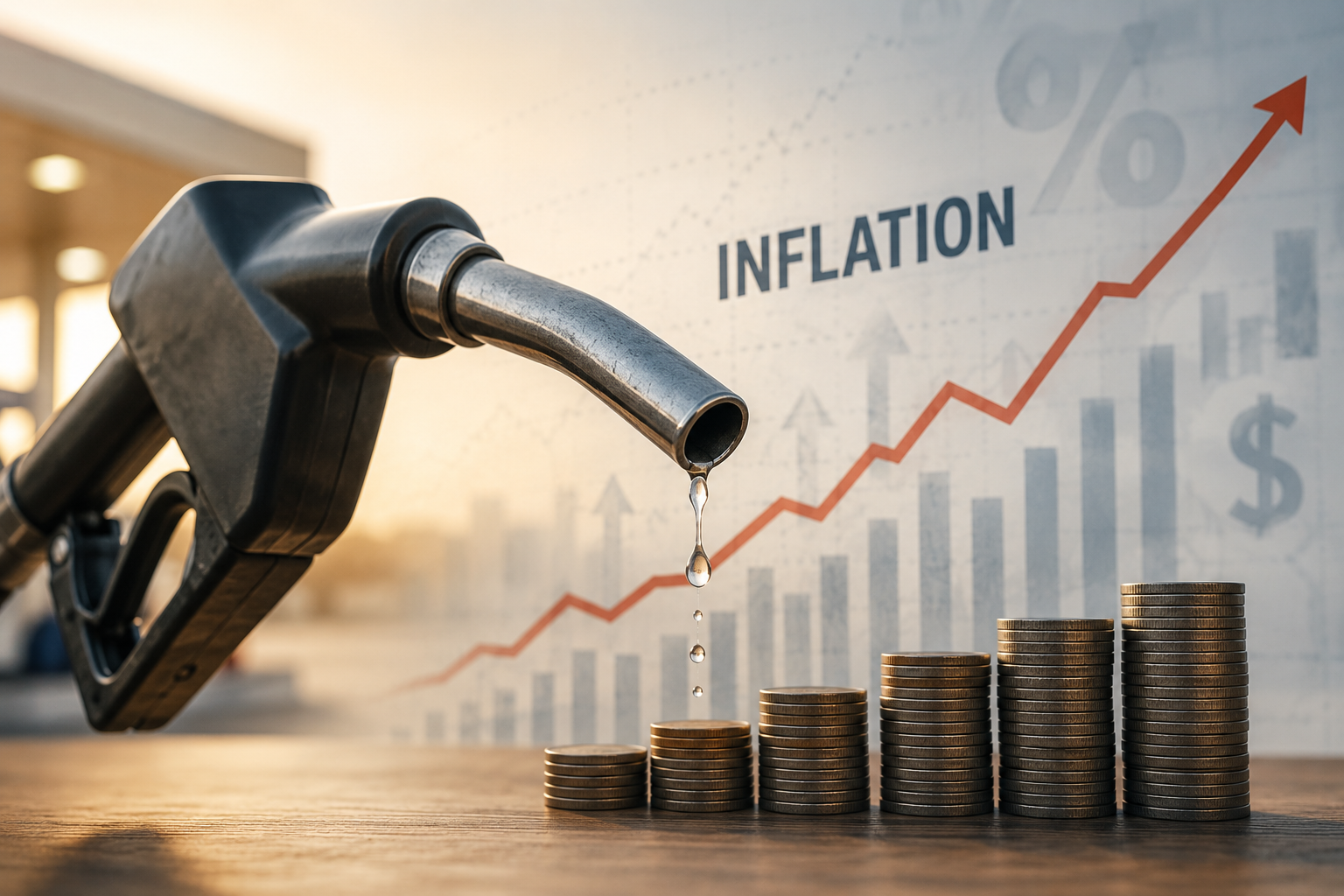
What Gas Prices Can Tell Us About Inflation
Every time we pull into a gas station, we instinctively glance at the price on the sign. Whether it's a welcome surprise or a frustrating increase, those numbers have a way of shaping how we feel about the economy before we ever open a news article or watch the financial headlines.
It's understandable. Fuel is one of the few expenses we see advertised so prominently, and because most of us encounter it several times each month, it becomes a mental gauge for whether life feels more or less expensive. But while gas prices are an important economic signal, they tell only part of the story.
One of the reasons I became a private wealth manager was a genuine curiosity about how everyday events connect to the broader economy and, ultimately, to our financial lives. I've found that understanding why markets and prices move often replaces uncertainty with confidence. Rather than reacting to headlines, we can make thoughtful decisions rooted in perspective.
Why Gas Prices Matter
Gasoline prices are closely tied to energy markets, global supply chains, geopolitical events, seasonal demand, refinery capacity, and inflation expectations. When prices rise, consumers often feel the impact immediately through higher commuting costs, travel expenses, and everyday goods that become more expensive to transport.
Because energy touches nearly every industry, rising fuel costs can ripple throughout the economy. Businesses may experience higher operating expenses, consumers may adjust spending habits, and inflation measures can trend higher.
However, gas prices alone do not define inflation.
Economists monitor a wide range of indicators—including wages, housing costs, healthcare, food, consumer spending, manufacturing activity, and the Personal Consumption Expenditures (PCE) Index, one of the Federal Reserve's preferred measures of inflation—to understand the broader health of the economy.
What This Means During Your Highest Earning Years
For professionals in their peak earning years, inflation can quietly erode purchasing power if income and investments aren't working efficiently.
These years often present opportunities to:
Maximize retirement plan contributions.
Invest excess cash strategically rather than letting it sit idle.
Evaluate tax-efficient investment strategies.
Build diversified portfolios designed to weather changing market conditions.
Stay disciplined instead of making emotional investment decisions during periods of uncertainty.
While market headlines may encourage short-term reactions, long-term wealth is more often built through consistency, diversification, and a financial plan that evolves alongside your career and family.
What Inflation Means for Retirees
For those who have recently retired—or are preparing to retire—inflation presents a different challenge.
Instead of focusing primarily on accumulation, retirement planning shifts toward preserving purchasing power while generating sustainable income over decades.
Questions become less about "How much have I saved?" and more about:
Will my income keep pace with rising costs?
How should my portfolio balance growth with stability?
Am I withdrawing at a sustainable rate?
How do taxes fit into my long-term retirement strategy?
Even moderate inflation can meaningfully increase the cost of healthcare, travel, housing, and everyday living over a retirement that may last 25 to 30 years or more. That's why retirement planning isn't simply about reducing investment risk—it's about managing risk thoughtfully while helping your assets continue working for you.
Looking Beyond the Headlines
Markets rarely move because of one headline or one economic report. They respond to thousands of data points, investor expectations, corporate earnings, interest rates, and global events all at once.
That's why I encourage clients to view headlines as information—not instructions.
The goal isn't to predict every market movement. It's to understand the broader landscape well enough to remain focused on what truly matters: your goals, your family, your values, and the life you're building.
Perspective Creates Confidence
Whether you're building wealth during your highest earning years or enjoying the retirement you've worked hard to achieve, understanding the forces shaping the economy can help you make more confident financial decisions.
The next time you notice the numbers changing at the gas pump, remember that they're more than just the cost of filling your tank. They're one small piece of a much larger economic picture—and one reminder that successful investing is built on perspective, patience, and a long-term plan rather than reacting to today's headlines.
At Elswick Investments, we believe informed investors make better long-term decisions. Our role is to help translate complex economic events into practical guidance so you can stay focused on what matters most: building and preserving wealth with confidence.

A New Fed Chair Doesn’t Change the Fundamentals of Investing
A new Fed Chair may impact headlines, but not the fundamentals of investing. Learn how creative professionals and millennial investors can stay focused on long-term wealth building.
When major economic leadership changes, investors naturally wonder what it means for their portfolios. With a new Federal Reserve Chair, headlines may focus on interest rates, inflation, and market expectations. But for long-term investors, the most important principles remain the same: stay diversified, invest consistently, manage risk thoughtfully, and avoid making decisions based on short-term news cycles.
Markets adapt to changing leadership, policy shifts, and economic uncertainty. A disciplined, long-term investment strategy is still the foundation for building wealth over time.
A Different Kind of Financial Guidance
Before Elswick Investments was a firm, it was a personal quest for financial guidance.
As founder Elizabeth Elswick, CFP®, shares:
"Before Elswick Investments was a firm, it was a personal quest for financial guidance. Like many of the clients I serve today, I was simply looking for answers. As a musician, I wanted to know how to build a secure financial future. I was told that a career in the arts and long-term financial security were incompatible. When I asked about aligning my investments with my values, I was warned that it would come at the expense of my portfolio’s performance.
I have found neither claim to be true.
This is what led me to build a practice dedicated to serving people who have too often felt misunderstood or underserved by traditional financial advice. I’m committed to providing practical guidance and resources that help clients approach their financial futures with confidence, clarity, and purpose over fear."
That perspective continues to shape the work Elswick Investments does today with creative professionals, millennial investors, and values-driven individuals.
Long-Term Investing for Creative Professionals
People in creative industries often follow nontraditional financial paths. Musicians, artists, designers, writers, entrepreneurs, and freelancers may navigate irregular income, project-based work, and evolving career goals.
That does not make long-term financial security out of reach.
With thoughtful planning, creative professionals can build investment strategies that support flexibility, stability, and future growth. For millennial investors especially, the focus should be on what can be controlled: saving consistently, staying invested, managing risk, and aligning financial decisions with long-term goals.
Values and Performance Are Not Opposites
Many investors want their portfolios to reflect their values. Whether through sustainable investing, socially responsible investing, or broader values-based investment strategies, the goal is not simply to react to trends. It is to build a portfolio that reflects both purpose and discipline. Investing with values does not have to mean abandoning sound investment principles.
The Bottom Line
A new Federal Reserve Chair may influence headlines, but it does not change the fundamentals of successful investing. For creative professionals, millennial investors, and long-term, values-driven individuals, the path forward is still built on clarity, consistency, and purpose. At Elswick Investments, we help clients approach their financial futures with confidence—without letting every headline dictate the plan.