

A Strategy Designed for Every Climate
Markets, like the weather, can change quickly. Discover how diversification can help build a portfolio designed to adapt through every season.
As we’ve left the spring of many ups and downs with the temperature outdoors, market volatility hasn’t stopped having its own dramatic ups and downs. It’s a good reminder that being ready for everything is important. In Chicago, having one jacket would be ridiculous. A parka? Smart. But only a parka? Silly. What would you wear on a breezy 60 degree day in a couple months?
Similarly, diversification within portfolios is like having a well-stocked closet full of boots and jackets for all types of seasonal climates. Just as it's sometimes time to retire a worn-out jacket instead of endlessly patching it, investments occasionally need to be reevaluated when the long-term outlook has fundamentally changed.
Watching the market every day can become an anxiety-ridden hobby, whereas review of the market and accounts on a quarterly basis helps really put the context and volatility in perspective while keeping a current view on what’s going on with accounts. It separates short-term noise from meaningful progress.
No two closets look identical with the difference of size and shapes and style preferences and budgets. Similarly, no two financial strategies are exactly the same due to difference of risk tolerance, time horizons, tax bracket, general investment preferences, and personal context. Having a diversified personalized portfolio allows you to know you have a sturdy investment vehicle that can be adapted for different climates.
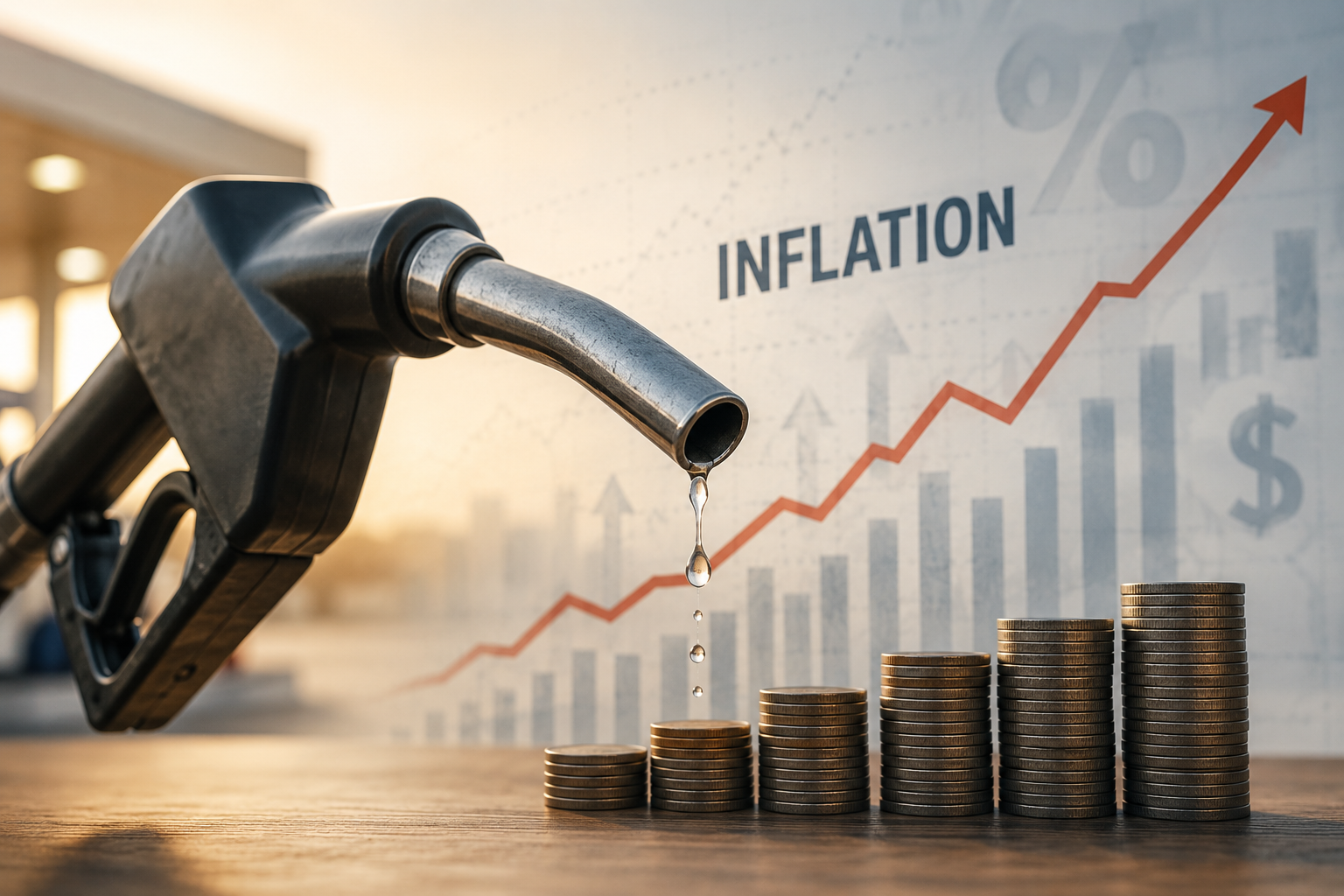
What Gas Prices Can Tell Us About Inflation
Every time we pull into a gas station, we instinctively glance at the price on the sign. Whether it's a welcome surprise or a frustrating increase, those numbers have a way of shaping how we feel about the economy before we ever open a news article or watch the financial headlines.
It's understandable. Fuel is one of the few expenses we see advertised so prominently, and because most of us encounter it several times each month, it becomes a mental gauge for whether life feels more or less expensive. But while gas prices are an important economic signal, they tell only part of the story.
One of the reasons I became a private wealth manager was a genuine curiosity about how everyday events connect to the broader economy and, ultimately, to our financial lives. I've found that understanding why markets and prices move often replaces uncertainty with confidence. Rather than reacting to headlines, we can make thoughtful decisions rooted in perspective.
Why Gas Prices Matter
Gasoline prices are closely tied to energy markets, global supply chains, geopolitical events, seasonal demand, refinery capacity, and inflation expectations. When prices rise, consumers often feel the impact immediately through higher commuting costs, travel expenses, and everyday goods that become more expensive to transport.
Because energy touches nearly every industry, rising fuel costs can ripple throughout the economy. Businesses may experience higher operating expenses, consumers may adjust spending habits, and inflation measures can trend higher.
However, gas prices alone do not define inflation.
Economists monitor a wide range of indicators—including wages, housing costs, healthcare, food, consumer spending, manufacturing activity, and the Personal Consumption Expenditures (PCE) Index, one of the Federal Reserve's preferred measures of inflation—to understand the broader health of the economy.
What This Means During Your Highest Earning Years
For professionals in their peak earning years, inflation can quietly erode purchasing power if income and investments aren't working efficiently.
These years often present opportunities to:
Maximize retirement plan contributions.
Invest excess cash strategically rather than letting it sit idle.
Evaluate tax-efficient investment strategies.
Build diversified portfolios designed to weather changing market conditions.
Stay disciplined instead of making emotional investment decisions during periods of uncertainty.
While market headlines may encourage short-term reactions, long-term wealth is more often built through consistency, diversification, and a financial plan that evolves alongside your career and family.
What Inflation Means for Retirees
For those who have recently retired—or are preparing to retire—inflation presents a different challenge.
Instead of focusing primarily on accumulation, retirement planning shifts toward preserving purchasing power while generating sustainable income over decades.
Questions become less about "How much have I saved?" and more about:
Will my income keep pace with rising costs?
How should my portfolio balance growth with stability?
Am I withdrawing at a sustainable rate?
How do taxes fit into my long-term retirement strategy?
Even moderate inflation can meaningfully increase the cost of healthcare, travel, housing, and everyday living over a retirement that may last 25 to 30 years or more. That's why retirement planning isn't simply about reducing investment risk—it's about managing risk thoughtfully while helping your assets continue working for you.
Looking Beyond the Headlines
Markets rarely move because of one headline or one economic report. They respond to thousands of data points, investor expectations, corporate earnings, interest rates, and global events all at once.
That's why I encourage clients to view headlines as information—not instructions.
The goal isn't to predict every market movement. It's to understand the broader landscape well enough to remain focused on what truly matters: your goals, your family, your values, and the life you're building.
Perspective Creates Confidence
Whether you're building wealth during your highest earning years or enjoying the retirement you've worked hard to achieve, understanding the forces shaping the economy can help you make more confident financial decisions.
The next time you notice the numbers changing at the gas pump, remember that they're more than just the cost of filling your tank. They're one small piece of a much larger economic picture—and one reminder that successful investing is built on perspective, patience, and a long-term plan rather than reacting to today's headlines.
At Elswick Investments, we believe informed investors make better long-term decisions. Our role is to help translate complex economic events into practical guidance so you can stay focused on what matters most: building and preserving wealth with confidence.

A New Fed Chair Doesn’t Change the Fundamentals of Investing
A new Fed Chair may impact headlines, but not the fundamentals of investing. Learn how creative professionals and millennial investors can stay focused on long-term wealth building.
When major economic leadership changes, investors naturally wonder what it means for their portfolios. With a new Federal Reserve Chair, headlines may focus on interest rates, inflation, and market expectations. But for long-term investors, the most important principles remain the same: stay diversified, invest consistently, manage risk thoughtfully, and avoid making decisions based on short-term news cycles.
Markets adapt to changing leadership, policy shifts, and economic uncertainty. A disciplined, long-term investment strategy is still the foundation for building wealth over time.
A Different Kind of Financial Guidance
Before Elswick Investments was a firm, it was a personal quest for financial guidance.
As founder Elizabeth Elswick, CFP®, shares:
"Before Elswick Investments was a firm, it was a personal quest for financial guidance. Like many of the clients I serve today, I was simply looking for answers. As a musician, I wanted to know how to build a secure financial future. I was told that a career in the arts and long-term financial security were incompatible. When I asked about aligning my investments with my values, I was warned that it would come at the expense of my portfolio’s performance.
I have found neither claim to be true.
This is what led me to build a practice dedicated to serving people who have too often felt misunderstood or underserved by traditional financial advice. I’m committed to providing practical guidance and resources that help clients approach their financial futures with confidence, clarity, and purpose over fear."
That perspective continues to shape the work Elswick Investments does today with creative professionals, millennial investors, and values-driven individuals.
Long-Term Investing for Creative Professionals
People in creative industries often follow nontraditional financial paths. Musicians, artists, designers, writers, entrepreneurs, and freelancers may navigate irregular income, project-based work, and evolving career goals.
That does not make long-term financial security out of reach.
With thoughtful planning, creative professionals can build investment strategies that support flexibility, stability, and future growth. For millennial investors especially, the focus should be on what can be controlled: saving consistently, staying invested, managing risk, and aligning financial decisions with long-term goals.
Values and Performance Are Not Opposites
Many investors want their portfolios to reflect their values. Whether through sustainable investing, socially responsible investing, or broader values-based investment strategies, the goal is not simply to react to trends. It is to build a portfolio that reflects both purpose and discipline. Investing with values does not have to mean abandoning sound investment principles.
The Bottom Line
A new Federal Reserve Chair may influence headlines, but it does not change the fundamentals of successful investing. For creative professionals, millennial investors, and long-term, values-driven individuals, the path forward is still built on clarity, consistency, and purpose. At Elswick Investments, we help clients approach their financial futures with confidence—without letting every headline dictate the plan.